Snapshot:
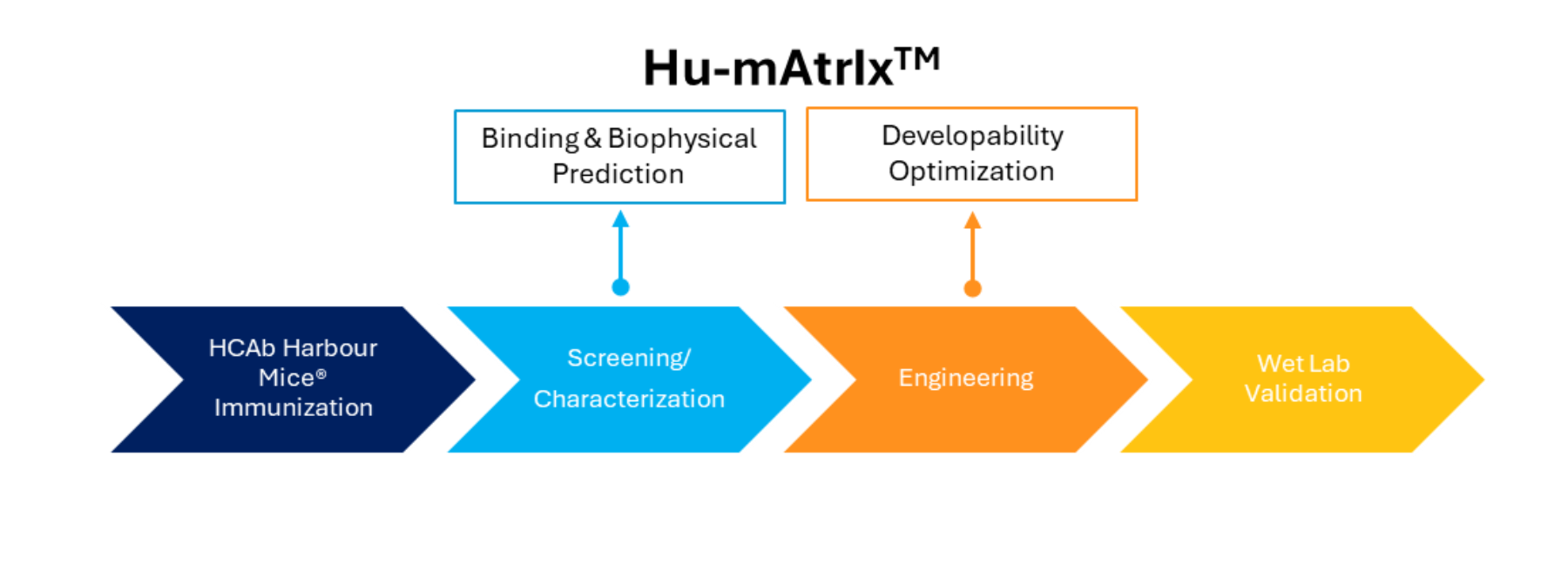
Hu‑mAtrIx™, the AI engine integrated into the Harbour Mice® antibody discovery workflow, identified early developability liabilities and guided targeted engineering, enabling selection of an HCAb variant with a +11.8 °C stability gain while preserving affinity, effectively de‑risking downstream development.
Background:
This case study focuses on the optimization of a fully human heavy‑chain–only antibody (HCAb) identified from a high‑affinity discovery campaign. While the lead demonstrated strong target engagement, it exhibited developability liabilities, most notably limited thermal stability, that posed risk for downstream manufacturing and formulation.
Such challenges are common in human and humanized antibody discovery, where selection pressure for binding and function often comes at the expense of biophysical robustness. Conventional optimization approaches rely on iterative mutagenesis and experimental screening, which are resource‑intensive, slow, and prone to attrition, particularly when stability improvements risk compromising affinity.
This case study illustrates how AI‑guided developability prediction enables rational, early‑stage optimization, identifying stabilizing sequence modifications that preserve function while accelerating progression toward development‑ready candidates.
Project Challenge:
The central challenge was to improve HCAb stability without introducing affinity loss or new developability risks. Traditional engineering routes offered limited predictability and carried a high risk of destabilizing functional regions. What was needed was a data‑driven, prospective approach capable of identifying stabilizing mutations early, before costly experimental cycles and downstream delays.
Objectives
- Identify developability liabilities in the HCAb lead that could impact manufacturability and downstream progression.
- Predict and prioritize sequence variants expected to exceed predefined thermal stability thresholds.
- Improve the lead antibody’s thermal melting temperature (Tm) while preserving binding affinity and functional activity.
- Reduce experimental screening burden by focusing validation on variants with the highest predicted developability scores.
- Confirm that AI‑guided optimization produces stability gains without introducing new developability risks.
Approach:
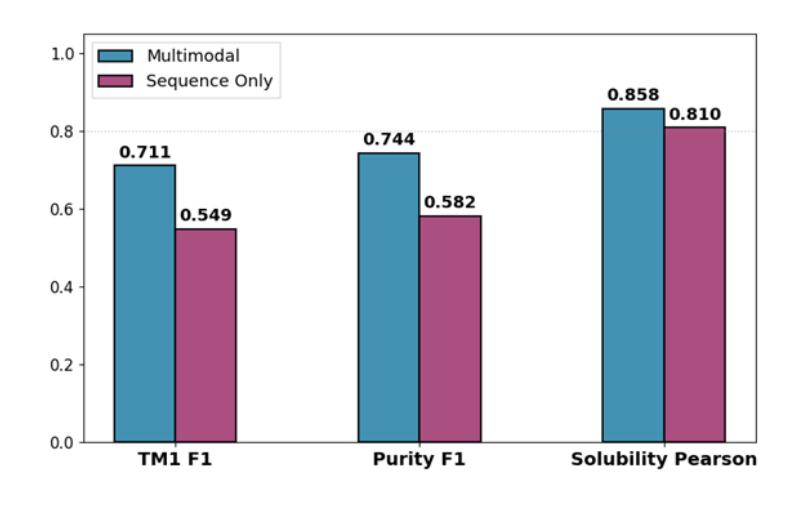
Hu‑mAtrIx™ is a multimodal, AI‑driven developability framework designed to support early, rational antibody engineering decisions. By integrating sequence, structural, and physicochemical features, the platform prospectively predicts aggregation risk, thermal stability, and solubility. In this study, Hu‑mAtrIx™ was used to rank and prioritize HCAb variants predicted to exceed predefined stability thresholds, enabling focused experimental validation while minimizing unnecessary engineering cycles.
Accuracy of AI-HCAb Multimodal Developability
Prediction Model vs. Sequence-only Model
Key Results:
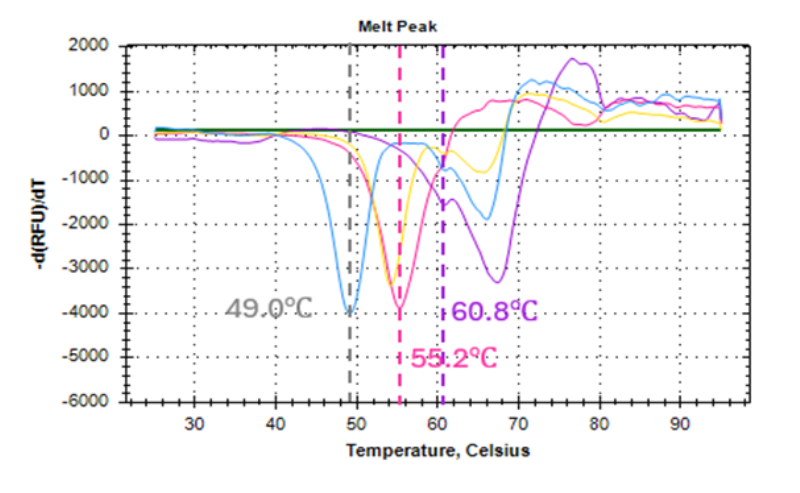
Hu‑mAtrIx™‑guided variant selection led to the identification of an HCAb with substantially improved thermal stability, increasing Tm from 49.0 °C to 60.8 °C (+11.8 °C). Importantly, this enhancement was achieved without measurable impact on binding affinity or functional performance, as confirmed by experimental wet-lab validation.
Hu-mAtrIx Guided Stability Improvement of HCAb Variant
Outcomes:
By enabling targeted, sequence‑level optimization early in discovery, this approach reduced experimental iteration and de‑risked progression toward downstream development. The resulting antibody met both functional and developability criteria, supporting confident advancement as a development‑ready candidate.
Why this Matters
- Stabilizes promising antibodies before CMC risk emerges
- Reduces trial‑and‑error engineering cycles
- Preserves functional integrity while improving manufacturability
- Accelerates transition from discovery to development decision points