Contact
Biologics Blogs

Antibody-Oligonucleotide Conjugates (AOCs): Unlocking Targeted Extrahepatic Delivery for Next-Generation RNA Therapeutics

Small oligonucleotide drugs, including small-interfering RNAs (siRNAs) and antisense oligonucleotides (ASOs), have rapidly advanced as next-generation therapeutics due to their high specificity, mechanistic versatility, ease of manufacturing, and generally favorable and manageable safety profiles. These advantages have translated into growing clinical success, as evidenced by the sharp increase in siRNA and ASO drug approvals since 2018, reflecting increasing regulatory confidence in both the efficacy and safety of oligonucleotide therapeutics [1].

FDA-Approved Oligonucleotide Drugs (2018-2025) [2].

siRNA Drug Company Target Indication Approval Date
Patisiran Alnylam TTR ATTR amyloidosis 2018
Givosiran Alnylam ALAS1 Acute hepatic porphyria 2019
Lumasiran Alnylam HAO1 Primary hyperoxaluria type 1 2020
Inclisiran Novartis PCSK9 Hypercholesterolemia 2021
Vutrisiran Alnylam TTR ATTR amyloidosis 2022
Nedosiran Novo Nordisk LDHA Primary hyperoxaluria 2023
Fitusiran Alnylam/Sanofi SERPINC1 Hemophilia A/B 2025
Plozasiran Arrowhead APOC3 Familial chylomicronemia syndrome 2025
ASO Drug Company Target Indication Approval Date
Inotersen Ionis/Akcea Therapeutics TTR Hereditary Transthyretin-Mediated Amyloid Polyneuropathy 2018
Golodirsen Sarepta Therapeutics DMD pre-mRNA, exon 53 skipping Duchenne Muscular Dystrophy 2019
Viltolarsen NS Pharma (Nippon Shinyaku) DMD pre-mRNA, exon 53 skipping Duchenne Muscular Dystrophy 2020
Casimersen Sarepta Therapeutics DMD pre-mRNA, exon 45 skipping Duchenne Muscular Dystrophy 2021
Tofersen Biogen SOD1 Amyotrophic Lateral Sclerosis 2023
Eplontersen Ionis/AstraZeneca TTR Hereditary Transthyretin-Mediated Amyloid Polyneuropathy 2023
Olezarsen Ionis APOC3 Familial Chylomicronemia Syndrome 2024
Imetelstat Geron Corp hTR/TERC Myelodysplastic Syndromes 2024
Donidalorsen Ionis KLKB1 Hereditary angioedema 2025

Overview of FDA-approved siRNA and antisense oligonucleotide (ASO) drugs, including the company, molecular target, indication, and approval date.

Despite their many advantages, the therapeutic success of oligonucleotide drugs hinges on precise and efficient tissue-specific delivery.

The widespread adoption of delivery technologies such as lipid nanoparticles (LNPs) and GalNAc conjugation has enabled highly effective targeting of hepatocytes and has been instrumental in the clinical success of numerous siRNA and ASO drugs [2]. However, efficient delivery to tissues beyond the liver remains a significant challenge, limiting the broader application of oligonucleotide therapeutics.

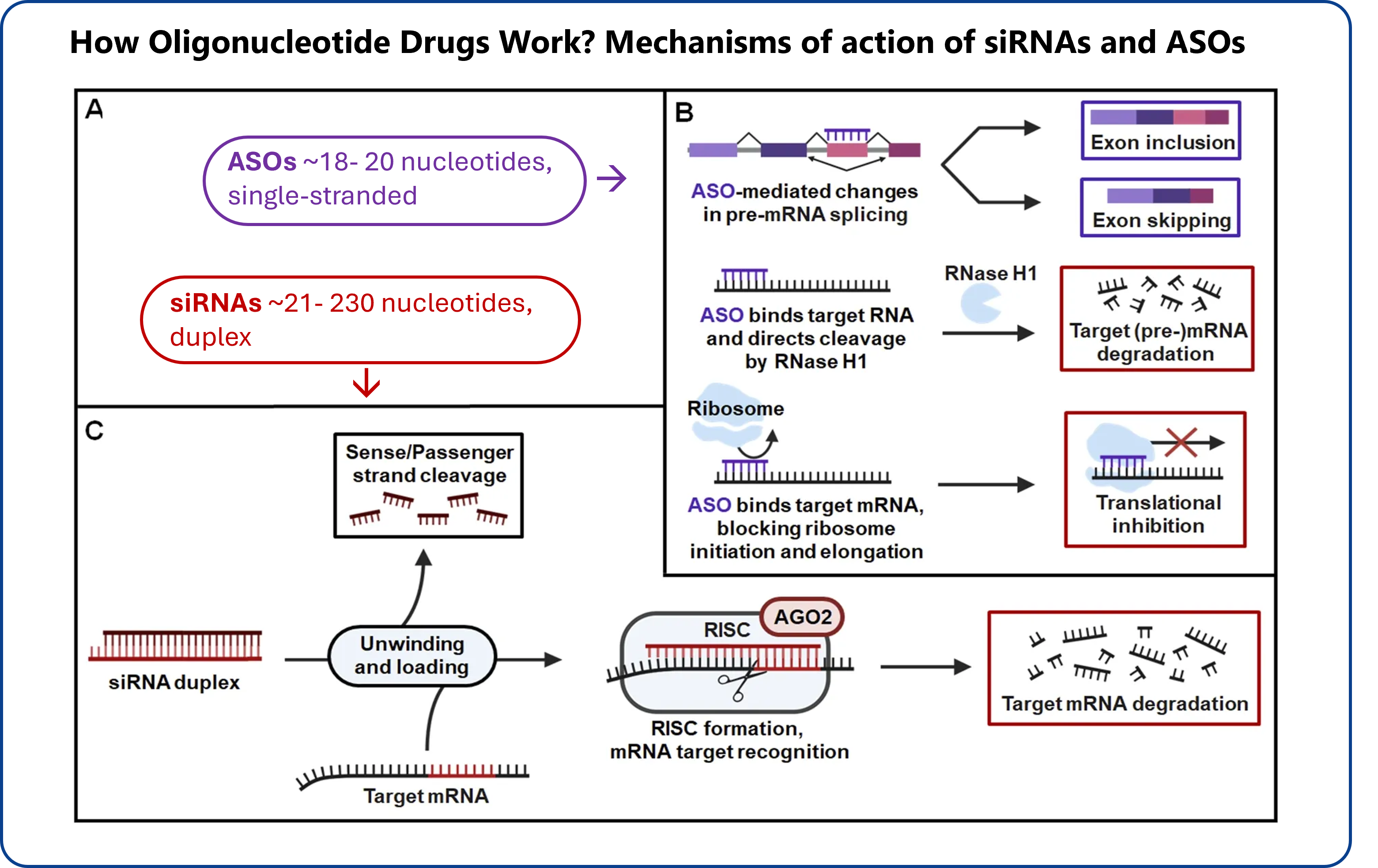
(B) ASOs are short, single-stranded oligonucleotides that target specific RNA sequences via Watson-Crick base pairing and alter expression of their corresponding proteins. ASOs can modulate target expression by several distinct mechanisms such as alternative splicing of pre-mRNA, induction of RNase H1-dependent cleavage of target RNA, and inhibition of target RNA translation through steric blockage of ribosome interaction. (C) SiRNAs are double stranded RNAs containing guide/antisense strands designed to target specific mRNA sequences by (near-)perfect complementary base pairing with target transcripts. After the siRNA is unwounded, the antisense strand is uploaded into the RISC where it identifies and cleaves complementary target mRNA sequence to modulate protein outcome.” Retrieved from Cronin and Yu, 2025, with modifications. Panel A of Figure 1 has been removed, and corresponding legend text has been omitted. Deed – Attribution 4.0 International – Creative Commons.

To address this limitation, antibodies are increasingly being leveraged as delivery vehicles to transport oligonucleotide therapeutics into extrahepatic tissues such as skeletal muscle, cardiac muscle, tumors, and the central nervous system. This strategy has given rise to a new modality: antibody-oligonucleotide conjugates (AOCs) [3].

Although AOCs remain an emerging therapeutic modality with fewer than ten active clinical programs, the growing preclinical pipeline and the success of both oligonucleotide therapeutics and antibody-based medicines suggest strong long-term potential [2,3].

From RNA Interference to Antibody-Oligonucleotide Conjugates

The journey toward AOCs began with the fundamental biological discovery of RNA interference (RNAi). Identified by Fire and Mello, RNAi revealed how cells naturally silence specific genes through double-stranded RNA. Years later, Davis and colleagues translated this concept into the clinic by demonstrating that systemically administered siRNA could achieve therapeutic gene silencing in humans [4,5].

A major technological breakthrough followed with the development of Genentech’s THIOMAB™ platform, which enabled site-specific conjugation of oligonucleotides to antibodies. Together, these advances laid the foundation for AOCs, a modality capable of coupling highly selective tissue targeting with precise RNA modulation.

Today, the field is approaching an important milestone. With Avidity Biosciences’ AOC 1001 potentially positioned to become the first approved AOC therapy and multiple additional candidates advancing through clinical development, what was once considered a promising concept is rapidly becoming a therapeutic reality [3].

Program Company Nucleic Acid Target Delivery Target Indication Clinical Stage
Delpacibart  Etedesiran (AOC 1001) Avidity Biosciences DMPK TfR1 Myotonic dystrophy Phase III
Delpacibart  Braxlosiran (AOC-1020) Avidity Biosciences DUX4 TfR1 Facioscapulohumeral muscular dystrophy Phase II
Delpacibart  Zotadirsen (AOC-1044) Avidity Biosciences Exon 44 TfR1 Duchenne muscular dystrophy Phase II
TAC-001 Tallac Therapeutics TLR9 CD22 Solid tumor Phase I/II
DYNE-101 Dyne Therapeutics DMPK TfR1 Myotonic dystrophy Phase I/II
DYNE-251 Dyne Therapeutics Exon 51 TfR1 Duchenne muscular dystrophy Phase I/II
ABX1100 Aro Biotherapeutics GYS1 TfR1 Late-onset Pompe disease Phase I
DYNE-302 Dyne Therapeutics DUX4 TfR1 Facioscapulohumeral muscular dystrophy Phase I
AOC 1072 Avidity / Atrium Therapeutics PRKAG2 TfR1 PRKAG2 syndrome Phase I/2

Clinical-Stage Antibody-Oligonucleotide Conjugate Therapeutics. Overview of representative antibody-oligonucleotide conjugate (AOC) programs in clinical development, including the company, nucleic acid target, delivery target, indication, and clinical stage.

The Growing Therapeutic Opportunity for AOCs

As the field matures, a clear shift is taking place, as antibody-based targeted delivery of oligonucleotide drugs opens the door to addressing chronic diseases affecting much larger patient populations, including cardiovascular disease, cancer, and neurodegenerative disorders.

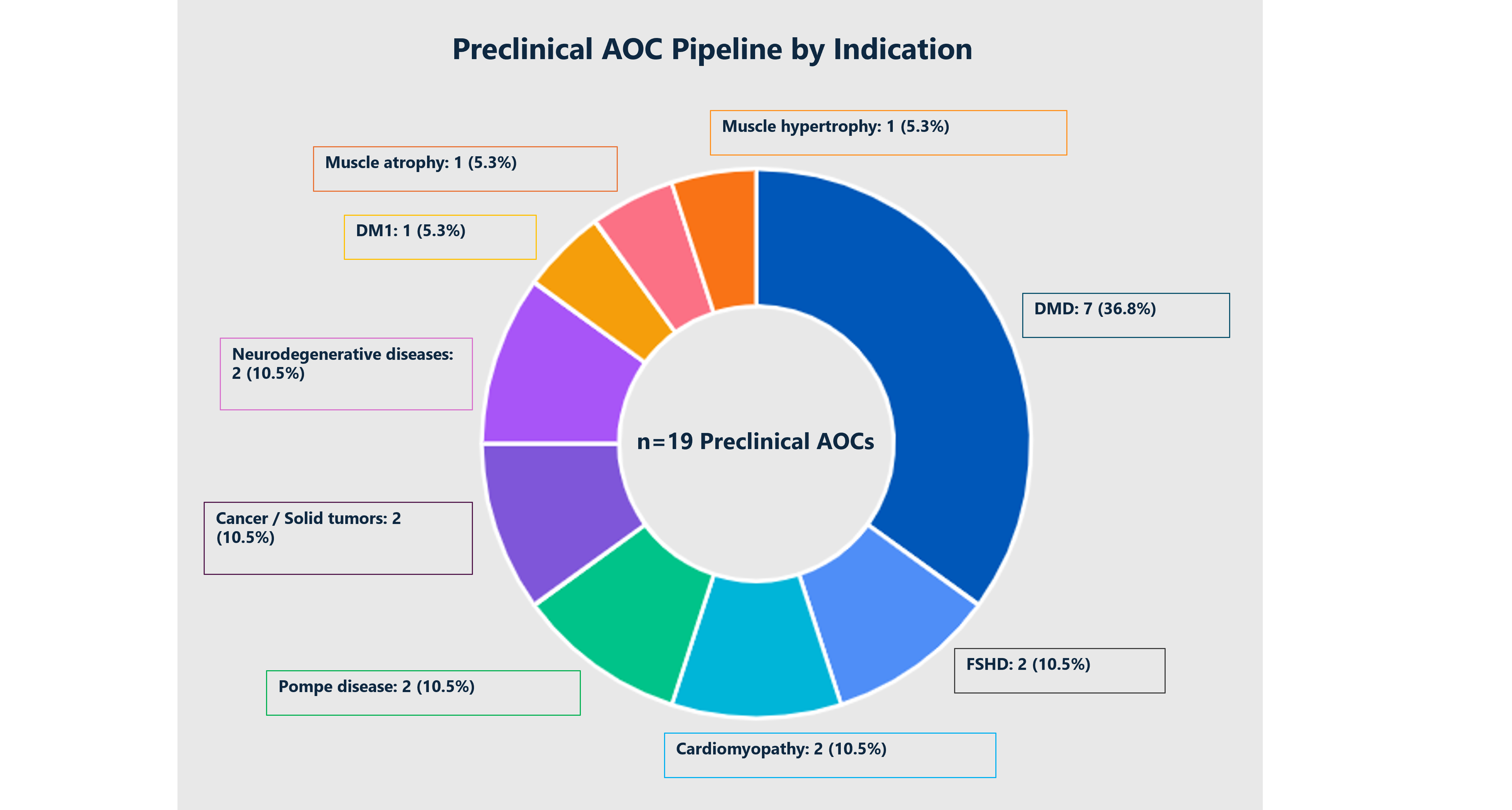
This trend is exemplified by Avidity Biosciences’ AOC 1072 and AOC 1086 programs for cardiomyopathy, Tallac Therapeutics’ TAC-001, TAC-002 and TAC-003 oncology programs, and Denali Therapeutics’ Oligonucleotide Transport Vehicle (OTV™) platform, which is being leveraged in OTV:MAPT and OTV:CH2 programs for Alzheimer’s disease and OTV:LF3 for Parkinson’s disease [3].
As the field expands into increasingly diverse therapeutic areas, target selection continues to emerge as a key determinant of success.

Why Target Selection Matters in AOC Development

While oligonucleotide payloads ultimately drive therapeutic activity, the success of an AOC is largely determined by its delivery target.

An ideal receptor should combine high expression in the desired tissue with efficient internalization and favorable intracellular trafficking properties. Importantly, receptor-mediated uptake must result in productive delivery of the oligonucleotide payload to intracellular compartments where gene silencing can occur.

Among the receptors explored to date, one target has emerged as the clear frontrunner.

TfR1: The Dominant Target in the AOC Landscape

Approximately 89% of clinical and preclinical AOC candidates leverage antibodies directed against transferrin receptor 1 (TfR1), making it by far the most commonly utilized target in the field [3].

This dominance is no coincidence. TfR1 possesses several characteristics that make it an attractive gateway for oligonucleotide delivery. As the primary receptor responsible for cellular iron uptake, TfR1 is abundantly expressed on the surface of many metabolically active cells, making it a readily accessible target. Moreover, TfR1 undergoes continuous receptor-mediated endocytosis through a well-defined clathrin-mediated pathway, with internalized receptors resurfacing on the cell membrane through the recycling pathway [6,7]. Together, these properties allow sustained and efficient internalization of therapeutic payloads following antibody binding.

TfR1’s high expression in skeletal and cardiac muscle initially made it an ideal target for addressing the longstanding challenge of efficient delivery to striated muscle. By exploiting TfR1-mediated uptake, AOCs have demonstrated substantially greater tissue accumulation and gene-silencing activity than unconjugated oligonucleotides [8].

These advances have accelerated development programs targeting disorders such as myotonic dystrophy type 1 and Duchenne muscular dystrophy, which collectively represent approximately 44% of the current AOC clinical and preclinical pipeline.

Beyond Muscle: Expanding the Role of TfR1

The appeal of TfR1 extends well beyond muscle tissue. The receptor is also expressed on brain endothelial cells forming the blood-brain barrier (BBB), where it has long been investigated as a molecular shuttle for transporting therapeutic agents into the central nervous system.

As a result, there is growing interest in leveraging TfR1-mediated transport to address neurological and neurodegenerative disorders, where crossing the BBB remains one of the greatest obstacles to effective treatment.

Therefore, although most clinically advanced AOCs currently remain focused on muscular disorders, TfR1-based delivery systems may ultimately enable gene-silencing therapies for a broad range of diseases affecting the brain and spinal cord [3].

TfR1 also presents significant opportunities in oncology. Rapidly proliferating cancer cells exhibit increased iron requirements to support growth and metabolism and often overexpress TfR1 relative to normal tissue [7]. This biology has driven years of investigation into TfR1-targeted antibody drug conjugates (ADCs) and nanoparticle-based therapies [9,10]. The same rationale can be applied to AOCs, enabling selective delivery of siRNAs and ASOs to tumors and potentially unlocking previously “undruggable” oncogenic targets.

Expanding Beyond TfR1

While TfR1 has risen prominently as the shuttle target of choice, TfR1-mediated delivery is not without challenges. One important limitation is the receptor’s widespread expression throughout healthy tissues, which can reduce tissue selectivity. In addition, accumulating evidence suggests that antibody affinity must be carefully optimized to balance receptor engagement, intracellular trafficking, and productive delivery [11,12,13].

Consequently, developers are increasingly exploring alternative receptors to achieve improved tissue specificity and delivery performance. Examples include CD22, SIRPα, and Nectin-4, which are being leveraged in oncology-focused AOC programs from Tallac Therapeutics [3]. Similarly, investigators pursuing BBB delivery are evaluating alternative receptor systems and bispecific shuttles designed to improve both efficacy and safety.

Recent studies using BBB transcytosis models further highlight the potential utility of dual-targeting approaches involving TfR1 and CD98hc, suggesting that future delivery platforms may move beyond single-receptor strategies [14].

Remaining Challenges in AOC Development

As an emerging modality and despite encouraging clinical progress, several technical hurdles continue to limit the full therapeutic potential of AOCs.

Impact of Oligonucleotide Payloads on Antibody Properties

Unlike the hydrophobic small-molecule payloads commonly used in ADCs, oligonucleotides are relatively large, highly charged macromolecules. Therefore, their incorporation can substantially alter the physicochemical properties of the antibody carrier [3].

Depending on payload chemistry, conjugation strategy, and oligonucleotide loading, AOCs may exhibit increased hydrodynamic size, altered pharmacokinetics, reduced manufacturability, or increased non-specific interactions with proteins and tissues. These considerations are particularly relevant for phosphorothioate-modified ASOs, which are known to bind a wide range of plasma and cellular proteins [1,15,16].

As a result, extensive engineering is often required to preserve antibody binding, maintain favorable biodistribution, and ensure stability throughout manufacturing and storage.

Site-specific conjugation technologies, optimized linker architectures, and controlled oligonucleotide-to-antibody ratios are becoming increasingly important tools for addressing these challenges. Together, these tools are critical to ensuring the development of AOC drugs that are stable, homogeneous, and provide consistent therapeutic effects [15,16].

Endosomal Escape: A Persistent Delivery Bottleneck

Successful receptor-mediated uptake alone does not guarantee therapeutic activity.

Following internalization, most AOCs enter the endosomal-lysosomal trafficking pathway, where a substantial fraction of the oligonucleotide payload remains trapped and may ultimately be degraded. Studies across multiple oligonucleotide platforms suggest that only a small proportion of internalized molecules successfully escape into the cytoplasm or nucleus, where they can engage their intended RNA targets. Consequently, endosomal escape is widely regarded as one of the most significant barriers limiting intracellular delivery efficiency [3,8,16].
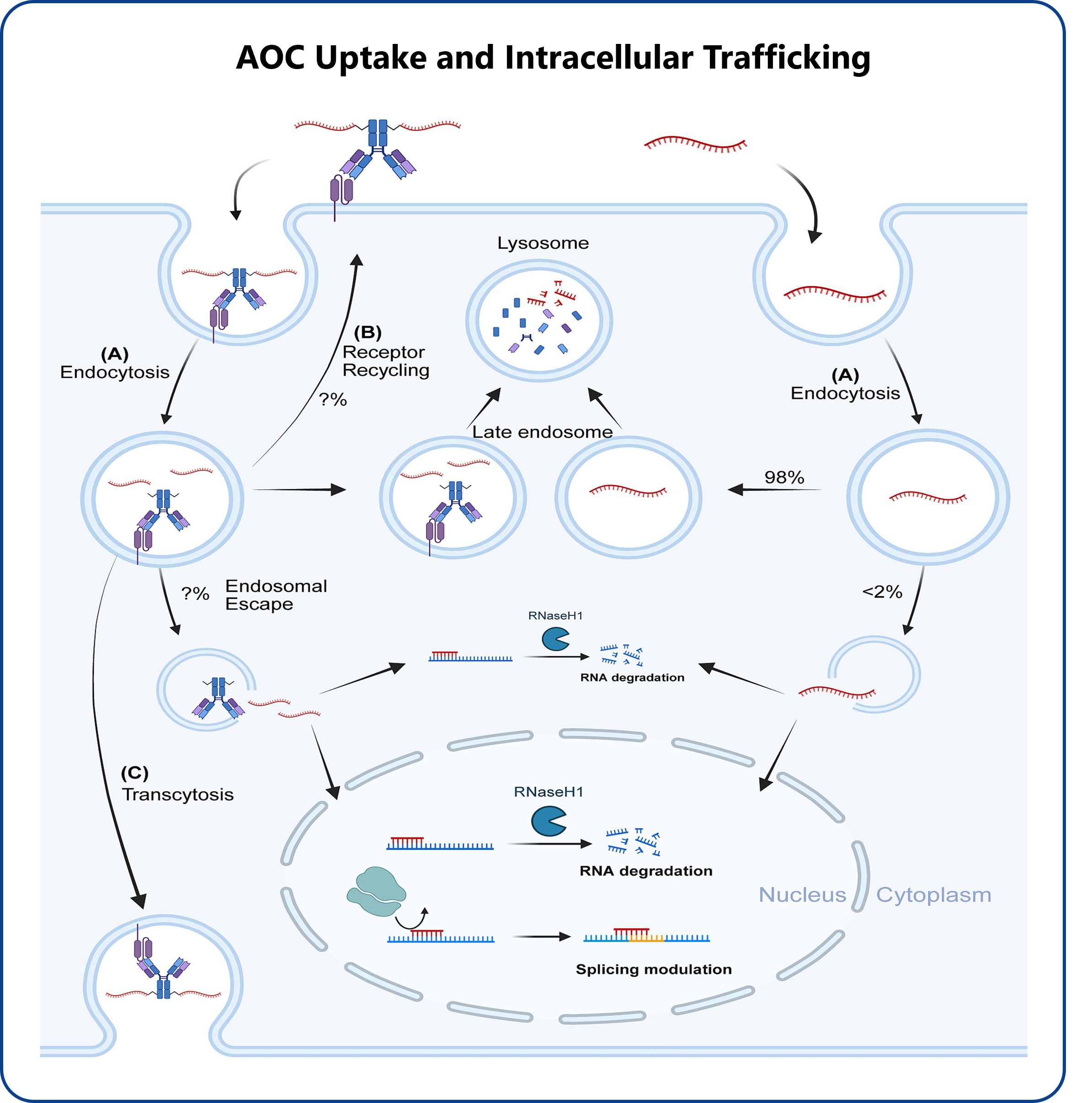
Comparison of the fates and action mechanisms of ASO-loaded AOCs after cellular entry (left half), as compared to unconjugated ASOs (right half). (A) Endocytosis: AOCs enter cells primarily through receptor-mediated endocytosis (the left half), whereas unconjugated ASOs (the right half) are internalized mainly via non-specific uptake pathways. (B) Receptor recycling: following internalization, AOCs may undergo receptor recycling, during which the antibody–receptor complex is trafficked back to the cell surface and released. (C) Transcytosis: certain AOCs can exploit receptor-mediated transcytosis pathways to cross biological barriers such as the BBB, facilitating tissue access not achievable by unconjugated ASOs; question marks in the left half denote that it is not well known how AOCs undergo receptor recycling, and limited information is available about the percentage of their escape from the endosome. Figure 3 and legend retrieved from Yu, C.H. et al. 2026 without modification. Deed – Attribution 4.0 International – Creative Commons

To address this challenge, researchers are investigating receptor selection strategies, intracellular release mechanisms, endosome-disrupting technologies, and linker designs that promote productive trafficking. Advances in understanding intracellular transport biology will likely play a critical role in unlocking the next generation of AOC therapeutics [16,17].
Outlook

Antibody-oligonucleotide conjugates are rapidly emerging as one of the most promising approaches for overcoming the long-standing challenge of extrahepatic delivery.

While the first wave of development has been driven largely by TfR1-targeted programs in rare muscular diseases, the field is already expanding into cardiology, oncology, and neurodegenerative disorders. Continued innovation in target selection, conjugation technologies, intracellular trafficking, and endosomal escape will be essential to fully realize the therapeutic potential of this modality.

As these challenges are addressed, AOCs have the potential to extend the reach of RNA therapeutics far beyond the liver, opening new opportunities to treat diseases that have historically remained beyond the reach of conventional drug modalities.

How Nona Biosciences Supports Next-Generation AOC Development

As antibody-oligonucleotide conjugates continue to evolve, the selection and engineering of the antibody carrier will remain critical determinants of therapeutic success. Beyond tissue targeting and intracellular delivery, antibody format, developability, and immunogenicity profiles can significantly influence the clinical performance of AOC candidates.

Nona Biosciences’ Harbour Mice® platform generates fully human antibodies, offering a valuable advantage for the development of conjugated therapeutics. Because these molecules are fully human in sequence, they may help reduce the risk of immunogenicity and anti-drug antibody (ADA) responses that can compromise drug exposure, efficacy, and long-term treatment durability in antibody-based therapeutics.

In addition to conventional IgG antibodies, the Harbour Mice® platform enables the discovery of fully human heavy chain-only antibodies (HCAbs) and their corresponding VH domains. These compact, fully human binders provide exceptional flexibility for the design of next-generation targeted therapeutics, including multispecific formats and complex delivery architectures.

For emerging modalities such as AOCs, fully human VH binders may offer unique opportunities to improve tissue targeting, receptor engagement, and payload delivery while maintaining favorable developability characteristics. Their small size and modular nature also create new possibilities for engineering bispecific and multispecific antibody-oligonucleotide conjugates capable of engaging multiple receptors, enhancing tissue selectivity, or overcoming intracellular delivery barriers.

As the field moves beyond first-generation TfR1-targeted approaches toward increasingly sophisticated delivery platforms, access to diverse fully human antibody and VH repertoires will be an important enabler of innovation. Nona Biosciences’ antibody discovery technologies are well positioned to support the development of next-generation AOCs, bispecific conjugates, and other advanced targeted therapeutics designed to unlock the full potential of RNA-based medicines.

Related Resources

To explore next-generation CAR design and delivery strategies in more detail:

Explore our AOC Development Capabilties

  1. Crooke S.T. et al. 2021. [Link]
  2. AlShaer D. et al. 2026. [Link]
  3. Li M. et al. 2025. [Link]
  4. Fire A. et al. 1998. [Link]
  5. Davis M.E. et al. 2010. [Link]
  6. Fu X. et al. 2026. [Link]
  7. Candelaria P.V. et al. 2021. [Link]
  8. Malecova B. et al. 2023. [Link]
  9. Ji T. et al. 2026. [Link]
  10. Daniels T.R. et al. 2012. [Link]
  11. Haqqani A.S. et al. 2024. [Link]
  12. Zhang W. et al. 2020. [Link]
  13. Pardridge W.M. et al. 2023. [Link]
  14. Sela T. et al. 2026. [Link]
  15. Dugal-Tessier J. et al. 2021. [Link]
  16. Yu C.-H. et al. 2026. [Link]
  17. Li Y. et al. 2026. [Link]
Privacy Settings
We use cookies to enhance your experience while using our website. If you are using our Services via a browser you can restrict, block or remove cookies through your web browser settings. We also use content and scripts from third parties that may use tracking technologies. You can selectively provide your consent below to allow such third party embeds. For complete information about the cookies we use, data we collect and how we process them, please check our Privacy Policy
Youtube
Consent to display content from - Youtube
Vimeo
Consent to display content from - Vimeo
Google Maps
Consent to display content from - Google
Spotify
Consent to display content from - Spotify
Sound Cloud
Consent to display content from - Sound
Contact