
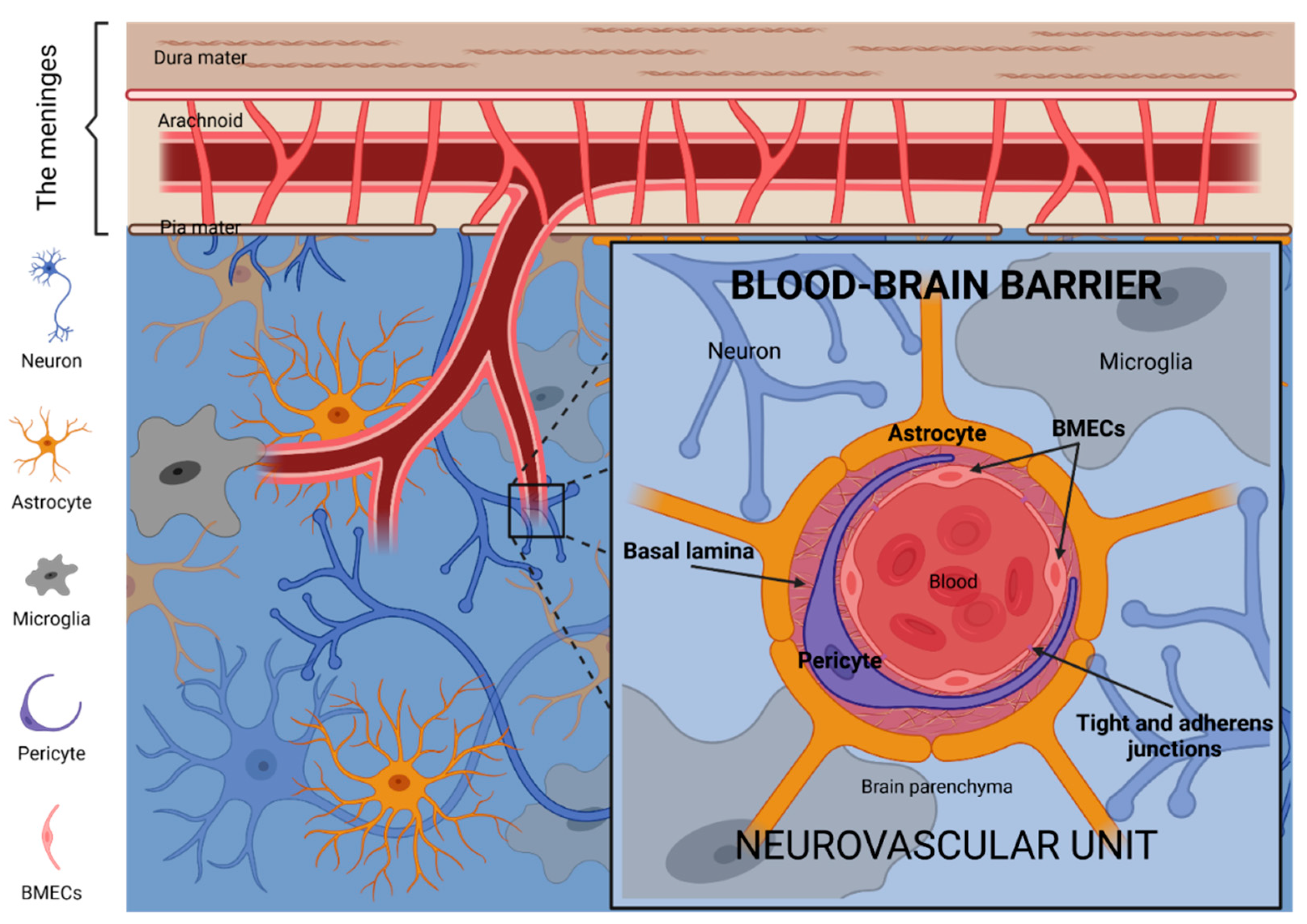
The blood–brain barrier (BBB) is a highly specialized and selectively permeable interface formed primarily by brain microvascular endothelial cells. By tightly regulating the exchange of molecules between the bloodstream and brain tissue, the BBB maintains central nervous system (CNS) homeostasis, protecting the brain from toxins, pathogens, and fluctuations in circulating factors. While essential for neurological health, the BBB also poses a major obstacle to therapeutic delivery, as most biologics, proteins, antibodies, and large-molecule drugs cannot passively cross it [1].

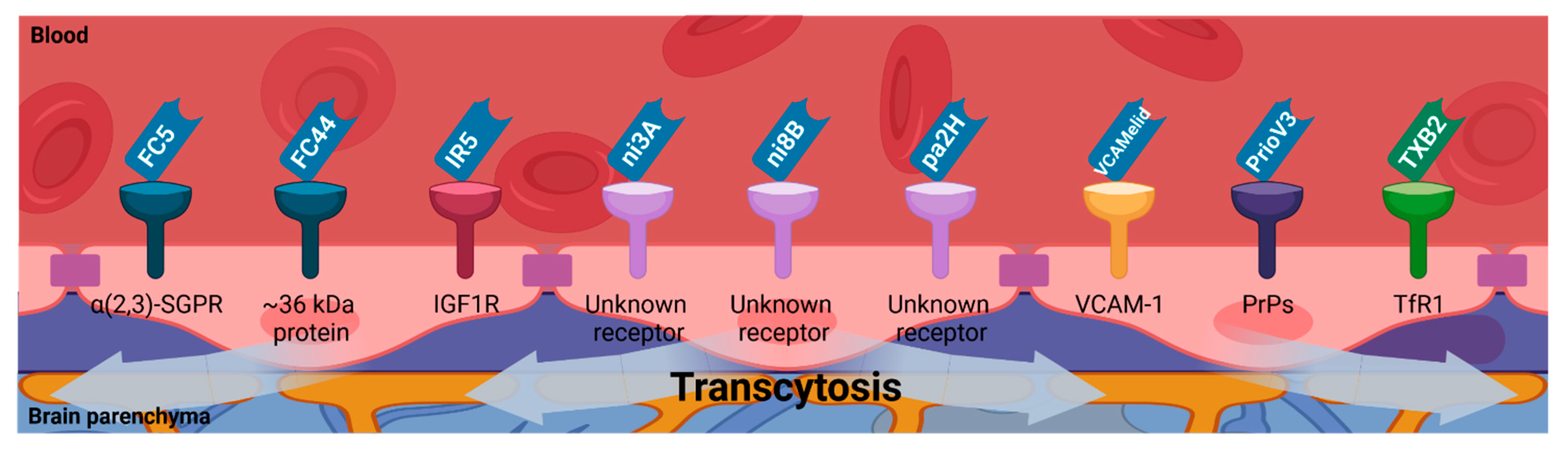
To overcome this challenge, researchers have increasingly exploited endogenous transport mechanisms. Receptor-mediated transcytosis (RMT) is a physiological process in which macromolecules bind specific receptors on endothelial cells, enabling their shuttling across the BBB into the brain [1]. Several RMT receptors have emerged as promising targets for CNS drug delivery, including transferrin receptor (TfR), insulin receptor (INSR), insulin-like growth factor 1 receptor (IGF1R), low-density lipoprotein receptor-related proteins (LRP1 and LRP8), LDL receptor (LDLR), CD98hc (SLC3A2), and leptin receptor (LEPR) [1,3].

Targeting transcytosis receptors may offer new opportunities for treating neurological disorders such as Alzheimer’s disease, Parkinson’s disease, brain cancers, lysosomal storage disorders, and other neurodegenerative and rare CNS diseases [1,3,4]. However, the utility of these receptors as potential targets for therapeutic BBB shuttling hinges on several variables.
First, their selective or predominant expression in the brain is of utmost importance for preventing off-target effects. Additionally, Zhang et al. have suggested that, within the brain, RMT targets may be most suitable when they exhibit high expression in brain capillary endothelial cells (BCECs) and relatively low expression in brain parenchymal cells, as this profile could help improve delivery efficiency while reducing off-target distribution and potential safety liabilities [3]. Lastly, other factors, such as the specific biology, the signaling mechanisms triggered by each receptor, unique internalization processes (e.g., clathrin- vs. non-clathrin-mediated endocytosis), endosomal trafficking, and the success rate of exocytosis onto the abluminal side of the BBB, further influence their utility as targets for brain drug delivery [1].
Clinical Perspective on the Current BBB-Shuttle Landscape
The current clinical landscape of BBB shuttle technologies is dominated by platforms targeting the transferrin receptor (TfR, CD71). TfR was the first receptor successfully exploited for RMT across the BBB and remains the most clinically validated BBB shuttle target to date. The clinical approval in Japan of Pabinafusp alfa (JR-141, IZCARGO®), an iduronate-2-sulfatase (IDS) enzyme fused to an anti-TfR antibody for the treatment of mucopolysaccharidosis type II (Hunter syndrome), marked a significant milestone as the first approved therapeutic to leverage receptor-mediated BBB transport [5,6].
Landscape of BBB Shuttle-based Therapeutics in Clinical Studies
| Drug | Company | BBB Shuttle Target | Indication | Clinical Stage | Clinical Trial ID |
|---|---|---|---|---|---|
| Trontinemab (RO7126209) | Roche/Genentech | TfR1 (Brainshuttle™) | Alzheimer’s disease | Phase III | NCT07170150 (TRONTIER 2) |
| Trontinemab (Brainshuttle AD study) | Roche/Genentech | TfR1 (Brainshuttle™) | Alzheimer’s disease | Phase Ib/IIa | NCT04639050 |
| Pabinafusp alfa (JR-141, IZCARGO®) | JCR Pharmaceuticals | TfR1 (J-Brain Cargo®) | MPS II (Hunter syndrome) | Global Phase III | NCT04573023 (STARLIGHT), First approved: Japan |
| Tividenofusp alfa (DNL310, ETV:IDS) | Denali Therapeutics | TfR1 (ETV platform) | MPS II (Hunter syndrome) | Phase 1/2 | NCT04251026 |
| Tividenofusp alfa (DNL310) | Denali Therapeutics | TfR1 (ETV platform) | MPS II (Hunter syndrome) | Phase 2/3 | NCT05371613 (COMPASS) |
| DNL126 (ETV:SGSH) | Denali Therapeutics | TfR1 (ETV platform) | MPS IIIA (Sanfilippo A) | Phase 1/2 | NCT06181136 |
| ANG1005 | Angiochem Inc | LRP-1 | Brain tumors and metastases | Phase 2 | NCT02048059 |
| DNL593 (PTV:PGRN) | Denali Therapeutics (formerly with Takeda) | TfR1 (Protein Transport Vehicle™, PTV) | Frontotemporal dementia due to GRN mutation (FTD-GRN) | Phase 1/2 | NCT05262023 |
| ABL301 / SAR446159 | ABL Bio / Sanofi | IGF1R (Grabody-B™) | Parkinson’s disease / α-synucleinopathy | Phase 1 completed | NCT05756920 |
| ALIA-1758 | Abbvie/Aliada Therapeutics | TfR1 | Alzheimer’s disease | Phase 1 | NCT06406348 |
Landscape of BBB Shuttle-based Therapeutics in Clinical Studies. Overview of representative clinical-stage therapeutics using BBB shuttle approaches, including the drug, company, shuttle target, indication, clinical stage, and associated clinical trial identifier.
Multiple programs from companies including JCR Pharmaceuticals, Denali Therapeutics, Genentech, and Roche have incorporated TfR-targeting transport vehicles for indications spanning lysosomal storage disorders, neurodegeneration, and frontotemporal dementia, establishing TfR as the benchmark against which emerging BBB shuttles are evaluated.
Despite these advances, several limitations of TfR have become increasingly apparent. First, TfR is not selectively expressed in the brain but is also expressed in peripheral tissues. Second, TfR is expressed in multiple CNS cell populations, including neurons and astrocytes, which can promote drug catabolism. Lastly, high-affinity TfR targeting can result in unproductive delivery, leading to degradation of therapeutic cargo within the lysosomal compartment [7,8,9]. Consequently, TfR-targeting therapeutics can experience target-mediated drug disposition, peripheral target engagement, and nonproductive uptake outside the BBB [1,3,10].
Bispecific BBB Shuttles: Combinatorial Targeting of Transcytosis Receptors
These limitations have stimulated interest in alternative BBB transport receptors, particularly CD98 heavy chain (CD98hc; SLC3A2), which displays exceptionally high expression in brain microvessels and has been shown to support robust antibody delivery into the CNS [1,11,12]. Notably, while TfR-mediated transport generally provides efficient, relatively rapid transcytosis, CD98hc-mediated delivery yields slower but more sustained accumulation within the brain parenchyma [13].
Overall, the two receptors utilize distinct intracellular trafficking pathways and exhibit different expression patterns, internalization rates, and biodistribution profiles [14]. These differences raised the intriguing possibility that simultaneous or combinatorial engagement of TfR and CD98hc could overcome limitations associated with either receptor alone or provide improved overall delivery performance.
The effectiveness of this combinatorial application for BBB crossing was first demonstrated by Wells et al. (Denali Therapeutics) using a “dual antibody Transport Vehicle (ATV)” [15]. Built on Denali’s engineered Fc-based ATV platform, the approach combined the strengths of each pathway within a single molecule. Dual targeting increased brain exposure of therapeutic cargo compared with TVs directed at either receptor alone. The study further showed that fine-tuning receptor affinities was critical, with lower-affinity TfR binding and higher-affinity CD98hc binding producing the most favorable delivery profiles.
Notably, CD98hc engagement contributed to more prolonged retention in the brain, complementing the efficient transport mediated by TfR. Together, these findings suggest that combining multiple BBB transport pathways may offer a more effective strategy for achieving robust and sustained delivery of biologics to the CNS [15].
Therapeutic Modality Matters for BBB Shuttle Optimization
A key lesson from Wells’ work is that there is no one-size-fits-all BBB shuttle. While dual TfR/CD98hc targeting showed particular promise for therapies requiring prolonged brain exposure, the authors noted that modalities such as proteins, enzymes, and oligonucleotides may behave very differently when linked to the same shuttle [15]. This realization has driven further research into how receptor selection, affinity, and cargo type collectively influence BBB transport efficiency. Recently published work by Sela et al. (Roche) leveraged advanced in vitro assays to evaluate transcytosis, trafficking, and binding of their “Brainshuttles™,” which combined TfR- and CD98hc-targeting to deliver antisense oligonucleotides (ASOs) across the BBB [16].
Antisense Oligonucleotides Raise the Bar for BBB Shuttle Design
ASOs are short synthetic nucleic acids that selectively modulate gene expression, making them an attractive therapeutic modality for a wide range of neurological disorders. However, ASOs do not readily cross the blood-brain barrier (BBB), which has largely limited their clinical use to invasive intrathecal administration. Therefore, antibody-mediated BBB shuttles offer a potential solution by enabling systemic delivery while leveraging RMT pathways to transport ASOs into the CNS.
By conjugating ASOs to BBB shuttle antibodies, researchers aim to combine the targeting specificity and long circulating half-life of antibodies with the potent gene-silencing capabilities of oligonucleotides. In principle, this approach could extend ASO exposure throughout the brain, expand the range of CNS diseases treatable via systemic administration, and improve patient convenience.
However, work by Sela et al. demonstrates that successful ASO delivery involves much more than simply attaching a therapeutic payload to a BBB shuttle. Instead, ASO conjugation can fundamentally alter shuttle behavior, requiring careful optimization of receptor selection, binding affinity, and intracellular trafficking to achieve efficient brain delivery [16].
A key finding from the study was that maximizing delivery requires looking beyond TfR targeting alone. While TfR is a well-established BBB shuttle target, its trafficking properties can be problematic for large antibody-ASO conjugates. This is because its strong receptor engagement can promote intracellular retention and lysosomal degradation rather than productive transcytosis. For ASOs, efficient BBB transport is only the first hurdle; therapeutic activity ultimately depends on their delivery to the appropriate brain cell populations, subsequent cellular uptake, and endosomal escape. As a result, receptor binding alone is not a reliable predictor of functional CNS delivery.
The Roche team further showed that ASO attachment can significantly influence receptor interactions. ASO conjugation increased the apparent binding of low-affinity TfR shuttles through avidity effects, yet unexpectedly reduced the binding strength of higher-affinity variants. In addition, ASO conjugation slowed transcytosis for many TfR-targeting constructs, highlighting how therapeutic cargo can alter intracellular trafficking and transport kinetics.
To address these limitations, the team explored CD98hc as an alternative and complementary BBB shuttle receptor. CD98hc offers several properties that are particularly advantageous for ASO delivery, including high expression on brain endothelial cells, distinct intracellular trafficking behavior, slower transport kinetics, prolonged membrane retention, and reduced intracellular degradation.
Building on these complementary characteristics, the team engineered a bispecific Brainshuttle™ combining low-affinity TfR binding with high-affinity CD98hc engagement. This dual-targeting strategy leveraged distinct receptor trafficking pathways to overcome the limitations of monospecific shuttles and significantly improved in vitro transport of ASO conjugates.
Collectively, these findings highlight an emerging principle in BBB shuttle engineering: successful brain delivery depends not only on the targeted receptor but also on the affinity of the interaction and on how the therapeutic payload reshapes transport biology. As BBB shuttle technologies continue to evolve, developers will need to carefully optimize receptor combinations and binding affinities for each therapeutic modality, including ASOs and siRNA conjugates, to achieve maximal delivery and therapeutic benefit.
Unparalleled Advantages of Fully Human HCAb VH Single Domains for BBB Shuttle Development
Fully human heavy-chain antibody (HCAb)-derived VH domains offer a compelling foundation for next-generation BBB-crossing therapeutics. Their small size (~15 kDa) minimizes molecular bulk, and their fully human origin helps mitigate immunogenicity concerns without the need for humanization. Unlike scFV-based shuttle modules, VH domains avoid challenges associated with synthetic linker instability and aggregation, improving overall molecular robustness.
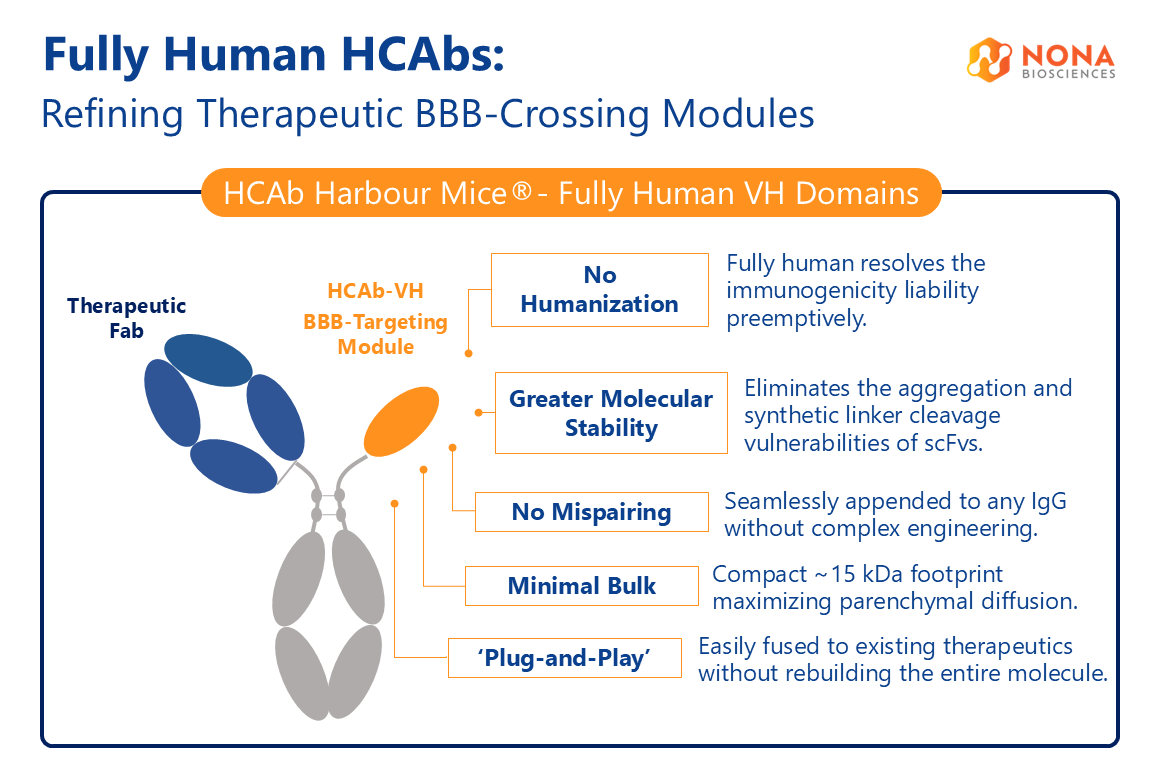
Equally important, their simple architecture enables seamless fusion to existing IgG therapeutics without introducing chain mispairing or requiring extensive re-engineering. This “plug-and-play” format allows developers to rapidly incorporate BBB-targeting functionality into established antibody programs, reducing development complexity and accelerating optimization. Together, these properties make HCAb-derived VH domains a versatile platform for designing BBB shuttles that balance manufacturability, stability, and efficient CNS delivery.
Related Resources To explore next-generation CAR design and delivery strategies in more detail:
- View our BBB Shuttle Infographic for a condensed, visual overview of how fully human VH domains function as modular building blocks across advanced biotherapeutic modalities.
- Read our White Paper on Fully Human HCAbs and VH domains for a deeper discussion on why HCAb-derived VH formats serve as foundational building blocks for next-generation therapeutic modalities
- Haqqani A.S. et al. 2024. [Link]
- Ruiz-Lopez E. et al. 2021. [Link]
- Zhang W. et al. 2020. [Link]
- Shin J.-W. et al. 2022. [Link]
- Yamamoto R. et al. 2021. [Link]
- Neuro Central. 2021. [Link]
- Joy Yu Y. et al. 2013. [Link]
- Bien-Ly N. et al. 2014. [Link]
- Niewoehner J. et al. 2014. [Link]
- Pardridge W.M. 2023. [Link]
- Joy Yu Zuchero Y. et al. 2016. [Link]
- Edavettal S. et al. 2022. [Link]
- Pornnoppadol G. et al. 2024. [Link]
- Chew K.S. et al. 2023. [Link]
- Wells R.C. et al. 2025. [Link]
- Sela T. et al. 2026. [Link]