When leaders from across biotechnology, pharmaceutical development, and investment come together, the conversation often extends far beyond science alone. Such was the case on September 14, 2026 at Nona Biosciences’ 4th Annual Next-Generation Biologics Forum, where more than 100 attendees gathered for an afternoon dedicated to understanding the forces shaping the future of medicine.
From genetic medicines and RNA-enabled technologies to multispecific biologics and emerging business models, speakers explored not only the innovations driving the field forward, but also the strategies and partnerships needed to transform scientific breakthroughs into meaningful patient impact.
Setting the Stage for the Next Generation of Medicine
The afternoon began with opening remarks and a keynote presentation from Dr. Jingsong Wang, Founder, Chairman and CEO of Harbour BioMed and Chairman of Nona Biosciences. Rather than focusing on any single technology or therapeutic area, Dr. Wang challenged attendees to consider the broader forces reshaping the future of biopharmaceutical innovation.
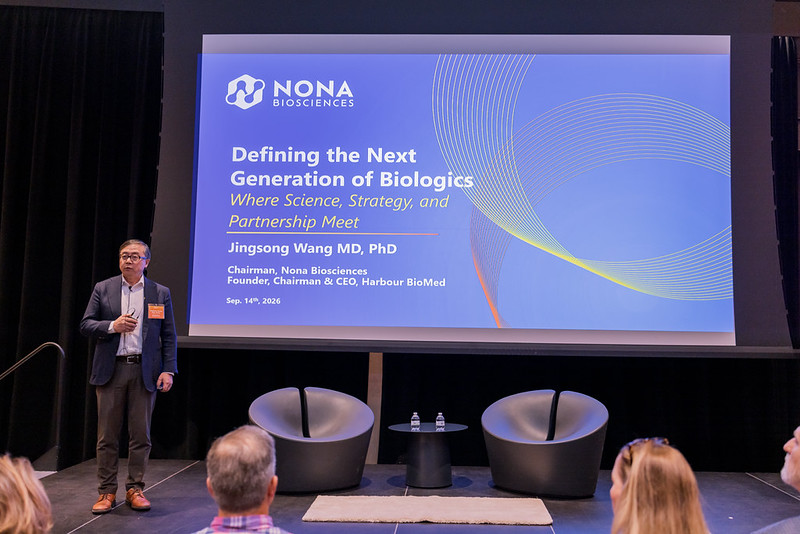
Drawing from both scientific and industry perspectives, he painted a picture of an industry entering a new era, one defined by increasingly sophisticated therapeutic approaches, global collaboration, and a relentless pursuit of solutions for patients with significant unmet medical needs.
Throughout his keynote, a recurring message emerged: the next wave of growth in biotechnology will be driven by the convergence of biology, engineering, and translational science. Emerging modalities such as antibody-drug conjugates (ADCs), T-cell engagers (TCEs), cell therapies, radiopharmaceuticals, and in vivo CAR-T technologies are expanding what is therapeutically possible and creating new opportunities to tackle diseases that have historically been difficult to address.
Yet, as Dr. Wang noted,
“The true impact of these innovations depends not only on the modalities themselves, but also on the technology platforms, scientific expertise, and development capabilities that enable them.”
– Jingsong Wang, M.D., Ph.D. Founder, Chairman & CEO, Harbour BioMed | Nona Biosciences
Another theme that resonated throughout his remarks was the increasingly interconnected nature of the global biotechnology ecosystem. Today’s innovations are no longer confined by geography. Scientific talent, investment, and technological expertise are flowing across borders at an unprecedented pace, creating new opportunities for collaboration and accelerating the path from discovery to development. In this environment, success will belong to organizations that can effectively combine breakthrough science with strategic partnerships and a global mindset. Building on these themes, the Forum brought together scientific leaders, drug developers, and investors to share their perspectives on the opportunities and challenges shaping the future of medicine. Ahead, we take a closer look at the key insights and lessons that emerged from each presentation and discussion throughout the afternoon.
Building Bridges Across Biotech Ecosystems
Following the keynote, attendees were treated to a fireside conversation between Dr. Jingsong Wang and Dr. Bruce Booth, Partner at Atlas Venture and one of the biotechnology industry’s most recognized investors, company builders, and thought leaders. Throughout his career, Dr. Booth has helped launch and guide numerous biotechnology companies, while also providing widely followed commentary on innovation, venture capital, and the evolving life sciences ecosystem.
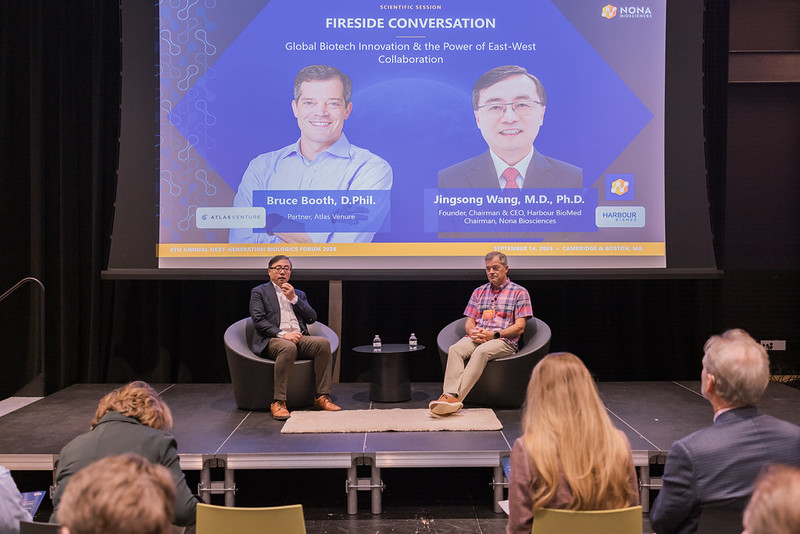
Their discussion explored the current state of the global biotechnology landscape and the increasingly important role of collaboration in driving innovation. Dr. Booth shared an optimistic perspective on the industry’s trajectory, noting signs of renewed momentum across the biotech sector and growing interest in innovative therapeutic opportunities. His remarks highlighted the importance of maintaining a long-term view, particularly during periods of market fluctuation, and reinforced the notion that breakthrough science continues to attract both investment and strategic interest.
A particularly compelling aspect of the conversation centered on China’s rapidly evolving biotechnology ecosystem. Dr. Booth reflected on the speed, efficiency, and innovation emerging from the region, noting that China’s contributions to drug discovery and development are becoming increasingly difficult for the global industry to ignore.
Their insightful exchange further highlighted how partnerships between organizations in the East and West can accelerate innovation by combining complementary strengths, expertise, and resources.
Rather than viewing global collaboration as a challenge, both speakers underscored the opportunities that arise when diverse biotech ecosystems work together toward a shared goal of advancing new medicines for patients.
Building the Right Gene Editing Tool for the Right Challenge
The Forum’s first scientific presentation shifted the discussion from broad industry trends to the rapidly advancing field of genetic medicines. Delivered by Dr. Birgit Schultes, Chief Scientific Officer of Intellia Therapeutics, Inc., the session provided attendees with a thoughtful and comprehensive look at how gene editing technologies are transforming the future of medicine.
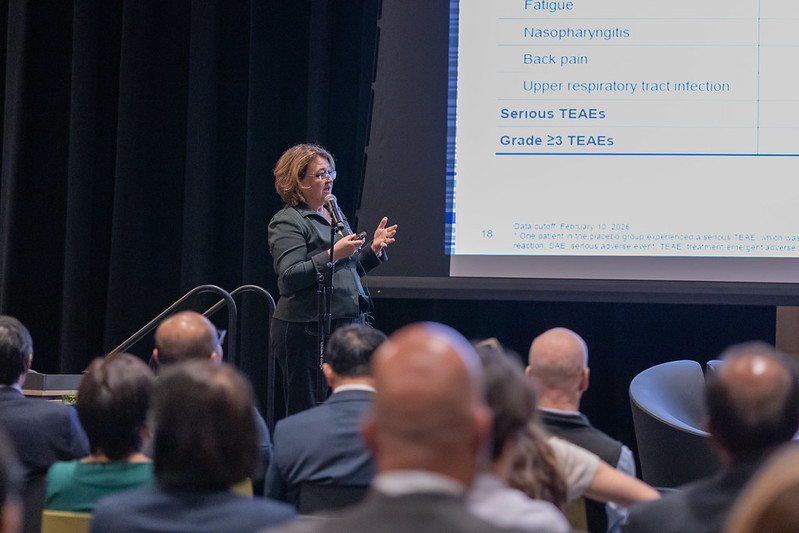
Dr. Schultes explored the remarkable progress that has brought the CRISPR-based gene editing field from a research concept to a therapeutic reality, while also highlighting the challenges and opportunities that remain ahead.
One of the most compelling aspects of the presentation was its ability to place today’s advances within the broader evolution of gene editing. Dr. Schultes guided the audience through the development of CRISPR-based technologies and the expanding toolbox now available to researchers, illustrating how continuous innovation has improved the precision, flexibility, and potential applications of genetic medicines.
Throughout her presentation, Dr. Schultes emphasized that gene editing is no longer a future aspiration but an emerging therapeutic reality. She shared examples of how genetic medicines are being investigated across a growing range of indications, including rare genetic disorders, cardiovascular diseases, oncology, autoimmune conditions, and chronic diseases. At the same time, she underscored the importance of continued innovation to address key challenges such as delivery, specificity, durability, and accessibility, all of which will play a critical role in determining how broadly these therapies can impact patients in the years ahead.
Another key takeaway from the session was the importance of selecting the right technology for the right therapeutic challenge. As the gene editing landscape continues to evolve, researchers now have access to an increasingly diverse set of approaches, each designed to address different biological and clinical needs.
Rather than searching for a single universal solution, the field is moving toward a more tailored and sophisticated understanding of how different gene editing technologies can be applied to specific diseases and patient populations.
Following the Biology: Turning Setbacks into Scientific Success
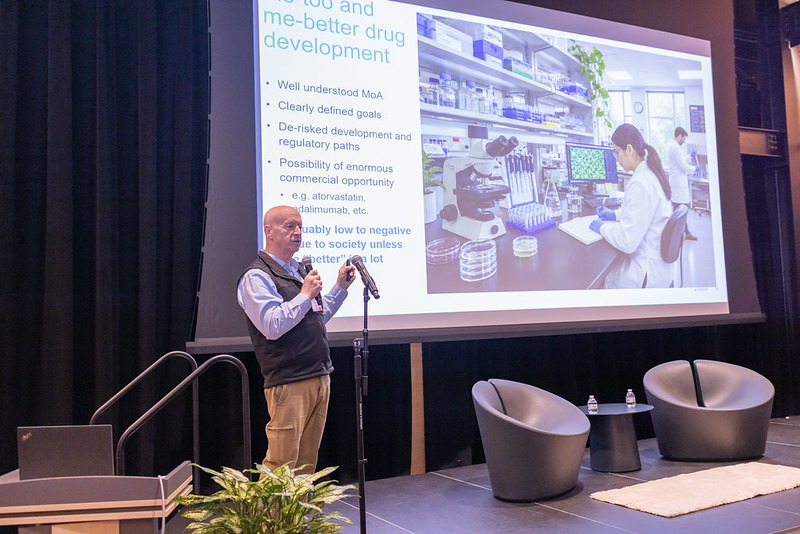
The Forum’s second scientific presentation offered a different perspective on innovation, one grounded not only in scientific discovery but also in the hard-earned lessons of drug development. Presented by Dr. Lloyd Klickstein, President and CEO of Koslapp Therapeutics and Interim CMO of Adicet Bio, the session drew upon decades of experience developing medicines across multiple therapeutic areas.
Rather than focusing on the newest modality or emerging technology, Dr. Klickstein challenged attendees to revisit a fundamental question: how can we improve the odds of delivering meaningful therapies to patients?
What made the presentation particularly engaging was its storytelling approach. Through a series of real-world examples spanning immunology, metabolism, obesity, and rare diseases, Dr. Klickstein illustrated how the path to successful drug development is often far from linear.
Many of the stories he shared centered on programs that appeared highly promising in preclinical studies, only to produce unexpected outcomes once tested in humans. These examples served as a powerful reminder that biology is often more complex than anticipated and that translating observations from animal models into human disease remains one of the industry’s greatest challenges.
While preclinical models remain essential tools for understanding mechanisms and evaluating safety, Dr. Klickstein emphasized that the ultimate test of a therapeutic hypothesis lies in human data. His examples demonstrated how differences between animal and human biology can alter outcomes in meaningful ways, highlighting the need for scientific rigor, critical thinking, and continuous reevaluation throughout the development process.
Equally compelling were his reflections on failure and the lessons it can provide. Several of the programs he discussed initially targeted the wrong disease indication yet ultimately found success when redirected toward more appropriate patient populations. These stories reinforced the value of persistence and adaptability, underscoring that a setback in one area does not necessarily invalidate the underlying science. Rather, successful drug development often requires the willingness to learn from unexpected results and follow the biology wherever it leads.
Another important takeaway centered on managing complexity in innovation. Dr. Klickstein shared a practical framework for evaluating development risk, highlighting how the likelihood of success decreases as programs simultaneously introduce multiple novel elements, whether in target selection, molecular design, indication, or development strategy. His message was not to avoid innovation, but to approach it thoughtfully. By limiting unnecessary variables and maintaining a strong scientific rationale, developers may improve their chances of translating breakthrough ideas into successful therapies.
Perhaps most memorable was the clinical lens through which Dr. Klickstein viewed innovation. Throughout the discussion, his focus consistently returned to patient need rather than technological novelty and framed drug development through first principles: understanding the biology underlying disease and identifying where interventions can have the greatest impact on patients’ lives. It was a perspective that resonated strongly with attendees.
Innovating to Deliver the Next Generation of Medicines: Science, Simplicity, and Following the Data
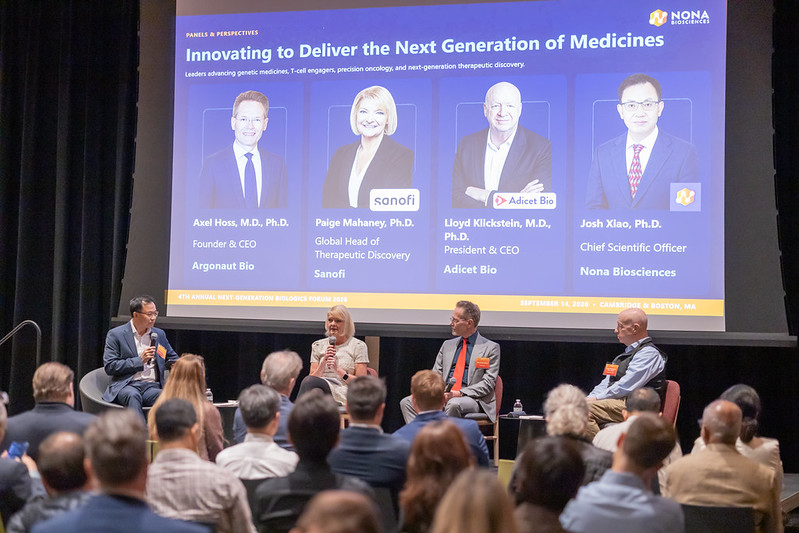
The afternoon’s scientific panel brought together Dr. Paige Mahaney, Global Head of Therapeutic Discovery at Sanofi; Dr. Axel Hoos, Founder and CEO of Argonaut Bio; and Dr. Lloyd Klickstein, President and CEO of Koslapp Therapeutics, for a wide-ranging discussion moderated by Dr. Josh Xiao, Chief Scientific Officer of Nona Biosciences. While the panel covered topics ranging from biomarker discovery and artificial intelligence to clinical development and emerging therapeutic modalities, several common themes emerged throughout the conversation.
Key Takeaways from the Discussion
Complexity should serve a purpose
Panelists emphasized that innovation does not always require increasing complexity. Whether developing a novel therapeutic modality or engineering a new molecule, the group repeatedly returned to a simple principle: if a well-established approach can effectively solve a biological problem, there should be a compelling reason to choose a more complex alternative.
Human biology remains the ultimate test
Echoing themes introduced earlier by Dr. Klickstein, the panel discussed the ongoing challenges of translating findings from animal models into meaningful clinical outcomes. While preclinical studies remain critical, panelists noted that the industry continues to search for better ways to validate therapeutic hypotheses earlier and more effectively in humans.
Unexpected observations often lead to breakthrough ideas
Several speakers reflected on how novel therapeutic concepts frequently emerge from surprising clinical observations or unexpected study outcomes. Rather than viewing these findings as failures, successful innovators often use them as opportunities to generate new hypotheses, uncover previously unrecognized biology, and identify entirely new therapeutic applications.
Artificial intelligence is a powerful tool, but not a substitute for scientific judgment
The panel explored how AI may help accelerate drug discovery, improve biomarker identification, and support clinical decision-making. However, the interpretation of biological and clinical data still requires scientific expertise, contextual understanding, and thoughtful decision-making.
Biomarkers remain one of the industry’s most important opportunities and challenges
Panelists discussed the critical role biomarkers play in both patient selection and the assessment of therapeutic efficacy. While significant progress has been made, identifying biomarkers that accurately predict clinical outcomes remains an important area of ongoing research and a potential driver of future improvements in drug development success rates.
From Innovation to Enterprise Value: Building Companies That Last
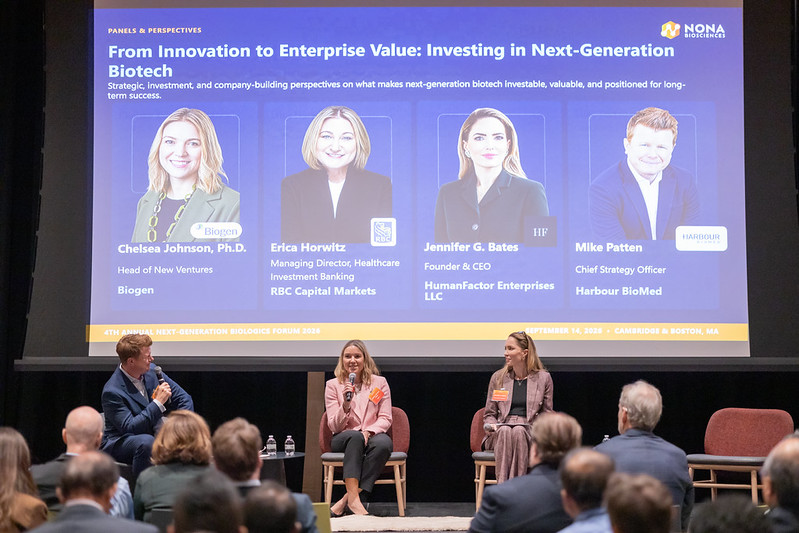
The day’s investor panel shifted the conversation from scientific innovation to the practical realities of building successful biotechnology companies. Moderated by Mike Patten, the discussion featured perspectives from Chelsea Johnson, Head of New Ventures at Biogen; Jennifer G. Bates, Founder and CEO of HumanFactor Enterprises LLC; and Erica Horwitz of RBC Capital Markets. While each panelist approached the topic from a different vantage point, the discussion centered on a common question: what separates promising science from sustainable enterprise value?
Key Takeaways from the Discussion
Great science is necessary, but not sufficient
A recurring theme throughout the conversation was that investors evaluate companies through a much broader lens than scientific merit alone. While innovative science remains the foundation of value creation, execution, leadership, and strategic positioning often determine whether a company can successfully translate that science into a viable business.
People matter as much as programs
Panelists discussed the importance of organizational strength, emphasizing that management teams, company culture, and leadership capabilities are critical factors in assessing investment opportunities. A strong scientific asset may attract attention, but long-term success requires the right team to navigate development, fundraising, partnerships, and commercialization.
Partnerships can accelerate success
The discussion highlighted the growing role of strategic relationships throughout the biotechnology ecosystem. Successful companies increasingly rely on partnerships that provide scientific expertise, development guidance, operational support, and access to capital, creating opportunities that extend well beyond traditional financing.
Supporting entrepreneurs goes beyond funding
Drawing from experiences at Biogen, Chelsea Johnson discussed how large biopharmaceutical organizations can help emerging companies refine development strategies, strengthen their scientific narratives, and navigate critical business decisions. This collaborative approach reflects an evolving model in which established industry players contribute both resources and expertise to help innovative companies succeed.
Enterprise value is built through execution
While breakthrough discoveries often capture headlines, investors ultimately look for evidence that teams can consistently deliver against milestones, adapt to changing circumstances, and execute on long-term strategies. The ability to reduce risk, make informed decisions, and build strong relationships can be just as important as scientific innovation itself.
The Future Will Be Built Through Partnership
Ultimately, from Dr. Wang’s keynote and across every session, from gene editing and biologics development to company building and investment strategy, a common message emerged: advancing the next generation of medicines requires more than breakthrough science alone. Success ultimately depends on the people, partnerships, and decisions that transform scientific potential into lasting impact for patients.
- View the Event Gallery